Wednesday, May 2, 2012

Report on the Propaganda of World War 2 by Cartoons

    Cartoon, the word comes from the italian word "pasteboard". I found about that in a book called Propaganda and Mass Persuasion by David Culbert. During the World War 2, the U.S government made business to the video cartoons industry to make propaganda videos. That was going to targeting towards the Japanese and the Germans. The methods were a bit extreme and there was major racism physical characteristics.
      Walt Disney made countless videos that was propaganda towards the Germans and the Japanese.
One of the famous propaganda videos is the De Fuhrer's Face staring Donald Duck  
It shows that Donald Duck is forced to work for the Germans making look as though they are evil and give no help to the workers. Out of Disney cartoons, Donald Duck is the with the most WW2 propaganda videos.

While watching the propaganda videos of WW2, one of the recommended choices was a video saying Hiroshima bombed. I watched it and quit halfway because it grossed me out.
Cartoons that was about ww2 was always not hatred towards the Japanese or Germans. A Japanese manga drawer by the name of Keiji Nakawaza. He was also a Hiroshima surviver, he was a first grader when the atomic bomb hit Hiroshima. The explosion killed his entire except his mom and her unborn child, but the child later died from radiation poisoning. He created a manga by the name of Black Rain, which was the first manga dealing with the atomic in 1968 he then made a comic called Barefoot Gen. One of the main reasons of making the manga was to show kids and the world in his perspective of the atomic bombing. He has won many awards from his work. Barefoot Gen turned into a tv drama and cartoon.
(WARNING if you can not stand gore or people dying slowly do Not watch this cartoon.)

Not only did they usually depict Nazis as wolves or vultures due to them being ravenous but also put a history lesson that we already knew into the cartoon. In this adaptation of the 3 Little Pigs, they put a appeasement policy in it but like in real life, Nazi Wolf does not keep his word and still invades. The message was likely also a joke towards Britain due to the Appeasement crisis.

Not only do they do messages about the "Japs" and the Germans, but they also  try to persuade people to pay loads of money to taxes. It also persuades that spending the money for a good time instead for the army, is what the nazis want you to do. (here is a cartoon about Donald Duck paying taxes)
The only difference in the anti Japanese cartoons and the Anti German cartoons is the physical appearance. If the Germans are human in the cartoon episode they look pretty normal. Japanese however are drawn as short statured, buck toothed slant eyes and extremely big glasses. In looney tunes Bugs bunny proves that Warner Bros. were more racist in the cartoon business than Disney.
(side note- there are a couple of foul mouth words in the cartoon about Japanese if you feel uncomfortable about it do not watch it.)

Disney then tried to convince people that in Germany, kids that were sick would be taken away to a "special place", and convince them that it is okay for a big creature to kill a little because it is weak and deserves to die. Also that they are the super race, and also they need to get rid of the weak countries because they do not deserve to be countries.

The cartoons were making messages that we are good while they are evil.

Monday, February 13, 2012

The battle of 1919 Charles Schenck vs. Supreme Court

      People say this country is great due to the 1st Amendment saying that we have the right to say to what we want to say, ever since this country was created. WRONG! During World War I, in order to make sure that going to war was the right thing to do and to get rid of consent that would be bad for the government due believing that the public be unionized (history book page 615) and not look like idiots. The Espionage Act of 1917 allowed the government to arrest people who "sabotaged or spying against the government". All from the history book.

    When things could not have gotten any worse for the government taking over the media and lives due to people talking bad about it I found about the Sedition Act of 1918, it allows anyone to be arrested for the sake of the Great War to be a positive support. All the while it was thanks to this sad little act that Charles Schenk was arrested under the Sedition Act and the Espionage Act.

     Charles Schenk a member of the Socialist Party, was arrested for the printing of documents that have "messed with drafting of new recruits for the war" The Socialists were saying that this forced recruitment is similar to breaking the 13th amendment, they were making them do things like slaves. It was then at that time that  the government would finally arrest Charles Schenk for just "just printing the leaflets" out for only 125 dollars.
 
Charles Schenk was sentenced to court then he was found guilty for not persuading a recruit but the leaflets. He then appealed to federal court, then to Supreme Court. the similarities between all of the courts was that he started talking about the first amendment and free speech. Sadly like all the other times he had gone to court, he was accused guilty and justice smited him. It was 0-9, all of the member agreed he was guilty.

After that all the members agreed he was guilty, it was only then that one of the supreme court members Justice Holmes at first wanted Schenk to be guilty of his "crimes". Justice Holmes actually felt regret towards what he had just done towards Schenk. Sadly even though he did nothing wrong the Government made a "example" out of him.

    Schenk's punishment could have been worse but it was pretty bad. For every time he went to court he had to serve time for a total of ten years. The math is three cases meaning, three times ten equals thirty years. The only problem is he served all three cases at the same time, meaning just ten years. Tens years of his life was wasted all for printing sheets.

picture of Charles Schenk                        Picture of Holmes 


Picture of Sedition Act 


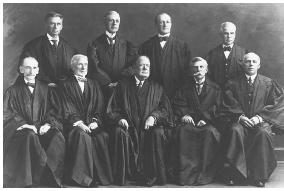
                                                    Picture of Supreme Court 1919

Tuesday, January 31, 2012

Indians helping in World War I

Many races and males and females joined up together to take down the forces of Germany. In 1916 however, Indian troops were supporting the British Troops against the Germans. the link here http://www.oucs.ox.ac.uk/ww1lit/education/pathways/path/kd7bq7/16, This link is special because it has the very first film of the Official Pictures in the British Army

Tuesday, January 17, 2012

Final Great White Fleet report by Sam Rushing

Day of Departure- Dec 23 1907 day that war ships leave making the 2 year trip around the world. picture of USS Connecticut departing Hampton Roads
http://www.history.navy.mil/library/online/gwf_cruise.htm

Rio- made it there on Jan 13 had huge problem, bar fight also brought the navy soldiers in to the fight cause problems tween Brazil and America http://www.ibiblio.org/hyperwar/OnlineLibrary/photos/events/ev-1900s/gwf07-09/gwf-2.htm

Callao Peru- Feb 20 1908 stayed for about nine days the people were excited for us created a dance piece called the "White Squadron" made sure we felt at home.

Sydney Australia- Set on Aug 15 and reached Sydney in five days on Aug 20, we were greeted in about 250,000 people they were quite happy and gave them the key to their city and also a famous moment when a navy soldier fell asleep on a bench with a do not disturb sign on it. and the picture of the kangaroo

Japan- Oct 18 1908 arrived ironically showered with much kindness and used their traditions causing the Americans to feel uncomfortable. and were killed with kindness 

Arrival to USA- Feb 22 1909
made it back to Hampton Roads when got back the ships not white as they used to.Roosevelt describing how great this service was to this country

Friday, January 13, 2012

Sams Great White Fleet research so far

in the research so far it says that the expedition started on Dec 16 1907. It was the at the location known as Hampton Roads Va. Roosevelt was on the Mayflower and was going to set the Fleet to sea. this web site has exact detail of where the Great White Fleet went to, and what happened to the places. but it has so much would take a while to put their expedition into my words.
http://www.history.navy.mil/library/online/gwf_cruise.htm.

Other website described how the models of the battle ships were describing where the turrets were and what the   names of the ships were ex. Illinois BB 7 Alabama BB 8
here is the website
http://www.greatwhitefleet.info/GWF-The_Battleships.html

Thursday, November 17, 2011

views on other people's blogs

the blogs were pretty amazing, for example Ashley Willis's one on how Annie Taylor was the first person to fall down Niagra Falls in a barrel just to have fame and money. Another good one was the danger of the Great Influenza killing 1/3 of the U.S population because of the mass deaths it brought the influenza down abit. Ben's was actually amazing due to the many ways they had storage for rich people and how it had rugs and paintings.

Monday, November 7, 2011

Birth of Jazz, Ragtime

Sam Rushing
Ana Lawson
11-6-11

Birth of Jazz, Ragtime

Not many people around my age have heard of the awesome piano based music Ragtime. It was created in the 1890’s to the 1920’s and had a second coming in the 1970’s. Ragtime music was often created by African Americans from
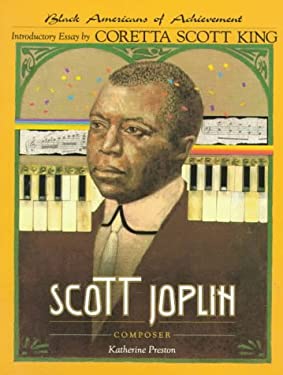
“ragging” tunes turning some songs in to choreographic songs. There were many geniuses that created many Ragtime songs such as Will Marion Cook, George Walker, and the Johnson Brothers. Not only people alone there was a ragtime group called Tin Pan Alley that composed Ragtime music. There was one though that was called the “King of Ragtime” and his name was Scott Joplin. One of his songs, Maple
Leaf Rag, was able to sell a million copies in the 1890’s to 1900’s.
            Scott Joplin made many types that young people would love to hear his songs, one of his songs was based on the terrible historic tragedy known as Crash at Crush. In Crush, Texas 1896, the idea was to stage two trains to look as though they crash into each other. Sadly the boilers from the trains exploded and maimed and killed a few people. Historians have no idea whatsoever, whether Scott was there at the crash or not. Some music though could not be found such as Morning Glory.
            Sadly historians could not find a lot about Scott Joplin’s life, for example where exactly he was born and when he was born. Historians do know that Scott Joplin’s lived in Sedalia, Missouri for a certain amount of years, but would have a huge impact with his life. Which helped contribute his ragtime music, since ragtime music was popular in New Orleans, and St. Louis. Then his family moved to Texarkana. Scott first taught himself to play the piano at a white owned house where his mom worked at. Then a German born man who was a musician named Julius Weiss. He then taught Scott how to truly play the piano. The first reported sign of his start of his musical career was the summertime of 1891, in Texarkana. Scott Joplin had many types of gigs and went to music classes at the George R. Smith College at Sedalia. Due to Julius’s teachings he was able to compose a concerto and called it Treemonisha, dedicating the song to his mother. Sadly the first time Scott played it was known as a failure,(this hyperlink is not his original this one was finished with the chorus this time).
            Just like Jazz, and also the Blues, Ragtime music also had a choreographic style, Scott Joplin made some of his songs for the pastime African American dance, “The Cake Walk”. It was actually created around the times of slavery, and for entertainment was couples would “strut around” and whoever won would win the cake. Examples of one of his cakewalk songs is the Swipsey Cakewalk. Besides this song that was a big influence on Ragtime music. At the beginning of the Jazz age, the Charleston came and took over.
            Around the year 1895, the group that had a huge impact on the music industry was the famous ragtime Tin Pan Alley Group. Among one of the publishers and also editor, was the famous Irving Berlin a Jewish Russian immigrant, who is known as one of the greatest songwriters of all time. What he did for the Tin Pan Alley was he categorized into four different categories, ballads, novelty songs, ragtime, and show songs, that way it would be easier to organize. Irving was not just a publisher, his ragtime song the Alexander’s Ragtime Band was known as a ragtime worldwide phenomenon. (Reason for the name Alexander was used was it was used for black characters).  Scott Joplin was known as the King of Ragtime, but Berlin was known as America’s Chief Ragtime Composer.


                                                                 Tin Pan Alley
                                                                 Crash at Crush
                                                                 

Thursday, November 3, 2011

report status on ragtime and Scott Joplin

for now the status on my report is going really well i started having a great liking to Ragtime which was made around the 1890's to the 1920's. It taught me that it is a preform of jazz and is mostly played by the piano i never realized that "Hello Ma Baby" was actually a ragtime created by the artists known as Tin Pan Alley. thanks for showing me Scott Joplin, a song that i like is Crash at Crush march song.

Wednesday, October 26, 2011

Total spending on Thanksgiving

In Thanksgiving it is not as consuming as Christmas is or Halloween this year but last year on Thanksgiving in 2010 the total spending that was done for Thanksgiving was 30.50 billion dollars compared to
Christmas at least 135.16 billion dollars, it not as big as
Christmas but it is a huge economic raiser.


http://www.ibisworld.com/Common/MediaCenter/Holiday%20Spending.pdf

Wednesday, October 19, 2011

question number 6 on national labor union

The special difficulties that labor face in 1870 was the National Labor Unions that gave workers rights.


Wednesday, October 12, 2011

Faces of America

Summarize what the films were about, and explain what a person might learn or appreciate from watching them. (2 paragraphs)


Faces of America is about 12 famous Americans and tells about the story of their descendants and their families coming to America. Due to new developments in geneology and genetics, Harvard scholar, Henry Louis Gates Jr. makes use of this technology to find the ancestry of these people.


This program shows how these families fought with everything they had to make sure they reached America. This is quite interesting. Some of them had to escape, some came here to ensure their family did not leave, and some of them fought for this country during World War II, despite their race and ethnicity. One can learn a lot about the 12 families, such as that despite being from all different places around the world, it was luck, skill, and determination that brought them all here.  

Monday, September 26, 2011

Andrew Carnegie

WHEN, WHY, and HOW did Carnegie give away money? 


Carnegie used his money to help many foundations but disliked charity due to believing in the value of hard work instead of giving money away. This is why he used his money to create the Carnegie Institution which help fund many cultural, educational, and scientific institutions in the 19th century and still today. He used his money to build over 2500 libraries, and he also gave 125 million dollars to a foundation called the Carnegie Corporation which helps colleges and schools. Andrew Carnegie used to live next door to a wealthy man named Colonel James Anderson who would allow working boys to use his library for free due to the United States of America not having a system of public libraries. Andrew Carnegie never forgot the Colonel's generosity and supported education since then. Andrew Carnegie was a firm believer of World Peace. He decided to create the Carnegie Endowment for International Peace and and also funded the building of the Hague Palace of Peace. Which is known as the World Court in the Netherlands in 1911.  


I learned about Carnegie here  and here.